
Simple Technology
What makes the black mirror so compelling is its ability to hold our conscience leaving us fascinated and unsettled by the possibilities it presents. Many of us find it difficult to put them down even when we’re having a cold beer after a stressful day with our friends. We continually seek to amplify the high with trippy and abstract videos or certain multiplayer games. So, the question here is what is more addictive?
Dopamine, the feel-good hormone is at the centre of ever-evolving landscape of technology which gets released when we anticipate a reward. For a rather long time, dopamine was associated with mediating pleasure but current evidence suggests it generates another strong emotion, desire (wanting). The feeling of wanting is tightly linked with the reward cues or vivid imagery about the reward. And for this reason, you keep scrolling on your phone until a message pops up, ‘ You’ve consumed 90% of your data…’ You might ask what does reward has to do with watching the next reel. See, people who spend a lot of time shopping online or going through social media feeds don’t necessarily feel good afterward. In fact, research suggests that people feel worse after than before. This is where understanding the difference between wanting and liking becomes important, something that dopamine perfectly does.
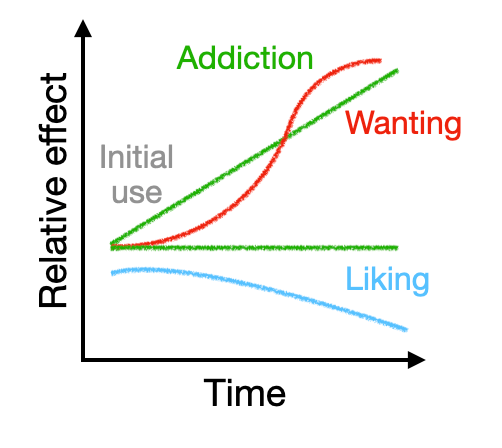
Dopamine tells your brain to concentrate on what triggered the increase in the neurotransmitters, basically the wanting aspect of dopamine, and not on whether you like it. It’s not hard to see the parallels between drug addiction and social media-associated screen time, where likes, shares, and followers hold significant power over our self-esteem and sense of worth.
How often do you find yourself struggling to remember what was done in yesterday’s class or meeting even though you were awake? While apps and gadgets may promise to enhance our lives, they also have the power to reshape our reality in ways we may not anticipate. A two-week inpatient study by Harvard Medical School shows usage of blue light-emitting screens before bedtime affects the body’s natural sleep/wake pattern and next morning alertness by suppressing melatonin (a hormone that makes you feel drowsy when it’s time to hit the hay). Further, consistently missing out on sleep for longer periods makes a good recipe for cancer-causing mutations.
With time “black mirror” itself has taken on new meaning, referring not just to the screens of our devices but also to the reflection of our own society staring back at us through those screens. Much of brain development occurs in the early stages of life and what happens on screen provides poor stimulation to the developing brain compared to reality. The brain requires wandering, diverse sets of offline and online experiences.
“Boredom is the space in which creativity and imagination happen” -Michael Rich
The Netflix interactive with the same title explores the dark side of technology serving as a reminder to approach with caution and mindfulness. So, for starters get off the dopamine high by putting the device out of sight at least for an hour or so in a day, and turn the greyscale on in display settings to make things less appealing. Then support non-profit initiatives such as the Centre for Humane Technology and also watch their award-winning Netflix documentary, The Social Dilemma. Finally, take control of your hijacked neural pathway!
P.S Keywords from your WhatsApp chats are used for showing you advertisements.
 grewal