
Simple society
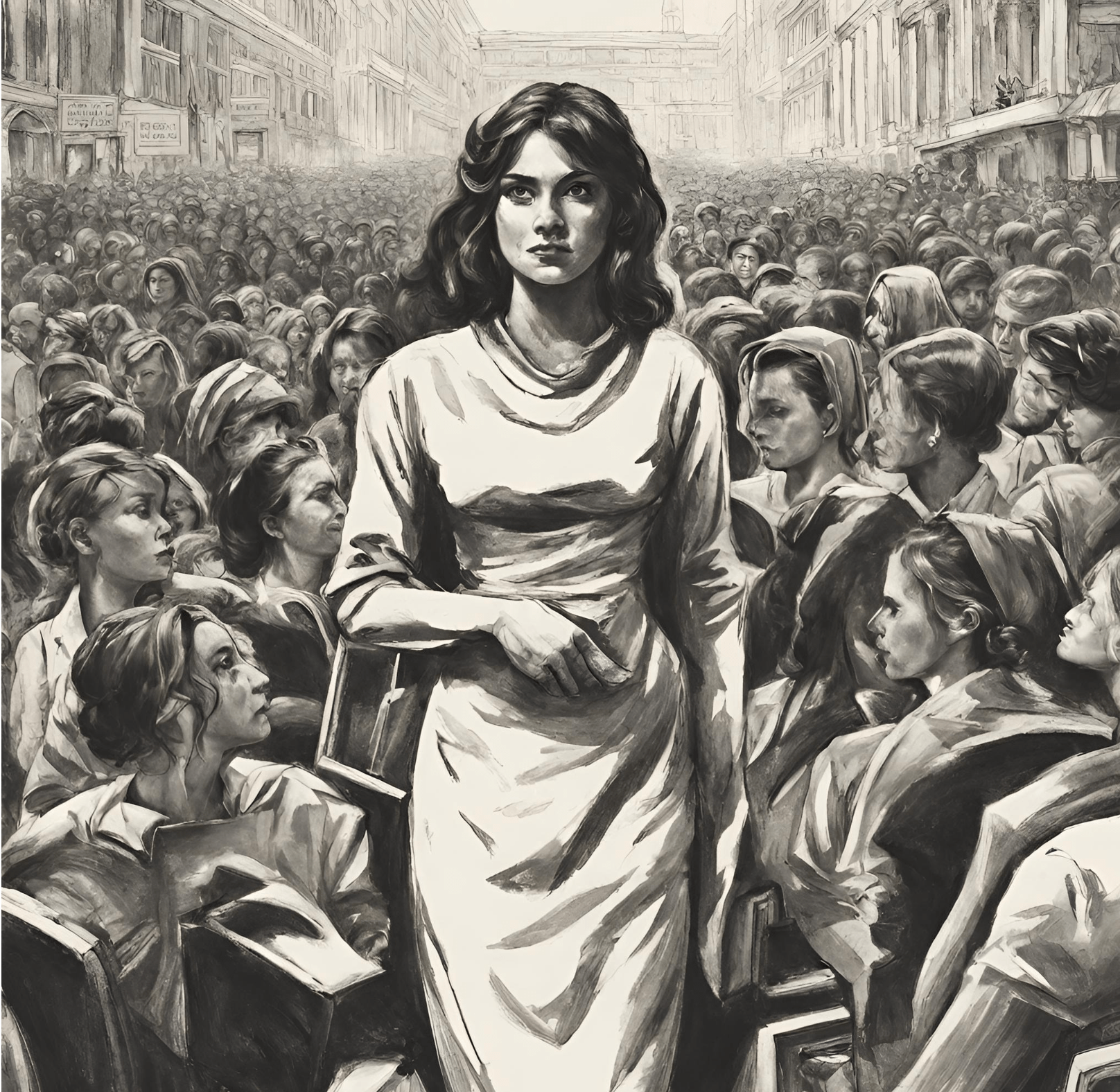
The famous dialogue from the 2016 blockbuster “Mhaari chhoriyan chhoron se Kam hain ke?” sure highlighted the female’s ability to make a dent, but honestly, they are kam (less). Let me throw some numbers.
As per the latest data released by the Centre for Monitoring the Indian Economy (CMIE), women’s labor force participation rate (WLFP) was 8.8% for the FY2022-23. What that means is less than 9 women out of 100 are working or looking for work outside the domestic work. Disheartening, right? Well, to make you feel better, another survey, the Periodic Labour Force Survey (PLFS), says WLFP is at 22%; the difference merely comes down to the fact that what looking for a job means and how categories are counted. While the world enchanted ‘Vasudhaiva Kutumbakam’, we hold the lowest rank in G20.
You may wonder if educated women must have better opportunities. Interestingly, they are more likely to be unemployed. The WLFP in illiterate women is higher compared to those who have an undergraduate degree. So, next time when you’re frustrated during your placement season or any job interview, why are your female colleagues getting all the jobs? Remember, they’re not! The stats mentioned show the surface froth masking deep problems that go back centuries.
“120 years ago, Marie Skłodowska Curie was the first woman to be awarded the Nobel Prize in Physics. I am the fifth. For more than 100 years, only two women were awarded the Nobel Prize in Physics. During the last five years, already three women have been awarded the Nobel Prize in Physics! I hope that this is a new trend which will inspire new generations!”
-Anne L’Huillier (2023 Nobel Prize Winner in Physics)
Movies such as Razzi, Salt, and Gone Girl do bring a sense of excitement, not for the fact that you would want someone like Rosamund Pike (from Gone Girl) around you but for the side that is too little explored. Watching females take centre stage, whether in Real or Reel life, alleviates the frustration in the ambition of leading more fulfilling lives. Well, not really. When Jacinda Ardern (Former Prime Minister of New Zealand) had to step down, it highlighted what kind of space and culture we’ve synthesized around half of the population. So, what are the fixes?
Law of Large Numbers says that an event with a low probability of occurrence in a small number of trials has a high probability of occurrence in a large number of trials. So, when more women are in power, then more women will be encouraged to follow the same pattern due to the role model effect of seeing themselves in winning seats, testing the limits of possibilities. Another study by Bocconi University suggests that the level of education increases with the implementation of a gender quota, pointing towards the fact that the quota substituted educated women for less educated men, which is a huge number in itself.
This means not just following the political mandate of having x% of women’s representation but practicing targeted hiring, training, and skill development programs and being free of one’s own biases. However, it takes very little time for this single line of suggestion to dissolve into a morass of complications.
Lastly, the idea of women QUOTA faces criticism also for its lack of intersectionality and inclusion of other marginalized groups in private and government spaces as well, that quotas artificially change the talent pool, where selection is not based on merit but on demographics.
Despite these debates, the implementation of women’s quotas remains a fundamental challenge in theory and practice.
 grewal