
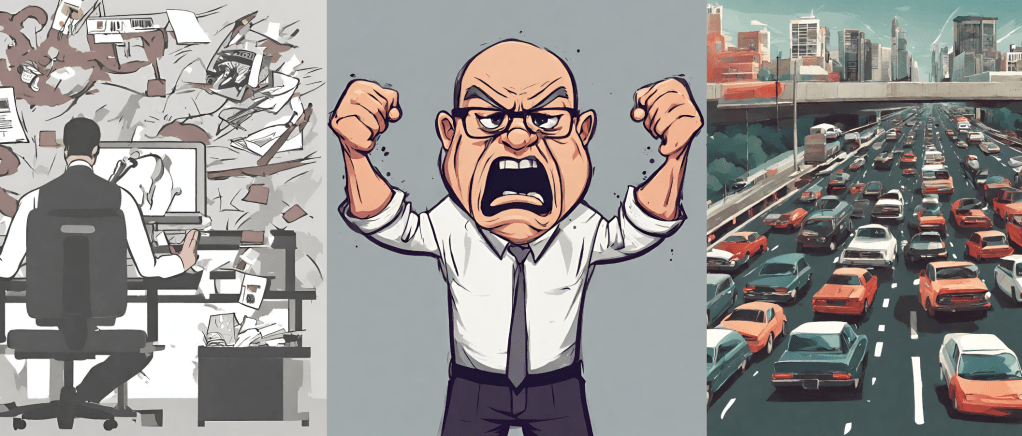
Whenever some smartass takes a sharp cut on the road or overtakes your vehicle wrongly, creative curses come out. But sometimes you take the high road because you are driving in an unfamiliar place (i.e., Haryana, UP, Bihar, basically north region) or know the person could be carrying a ‘Bandook / Pitaji’ sitting right next to you. The interesting part is that you somehow know, but when this filter goes away, it becomes an intriguing question.
So how does this work? Let’s take it from the top!
Anger, being a response to threat, is your body’s way of getting ready to deal with the situation, activating the fight or flight response. What happens next is that your body releases adrenaline and cortisol (stress hormone). This, in turn, shifts the blood supply from your gut to muscles, increasing your heart rate and raising the temperature. Your pupils get bigger to let more light in while breathing faster.
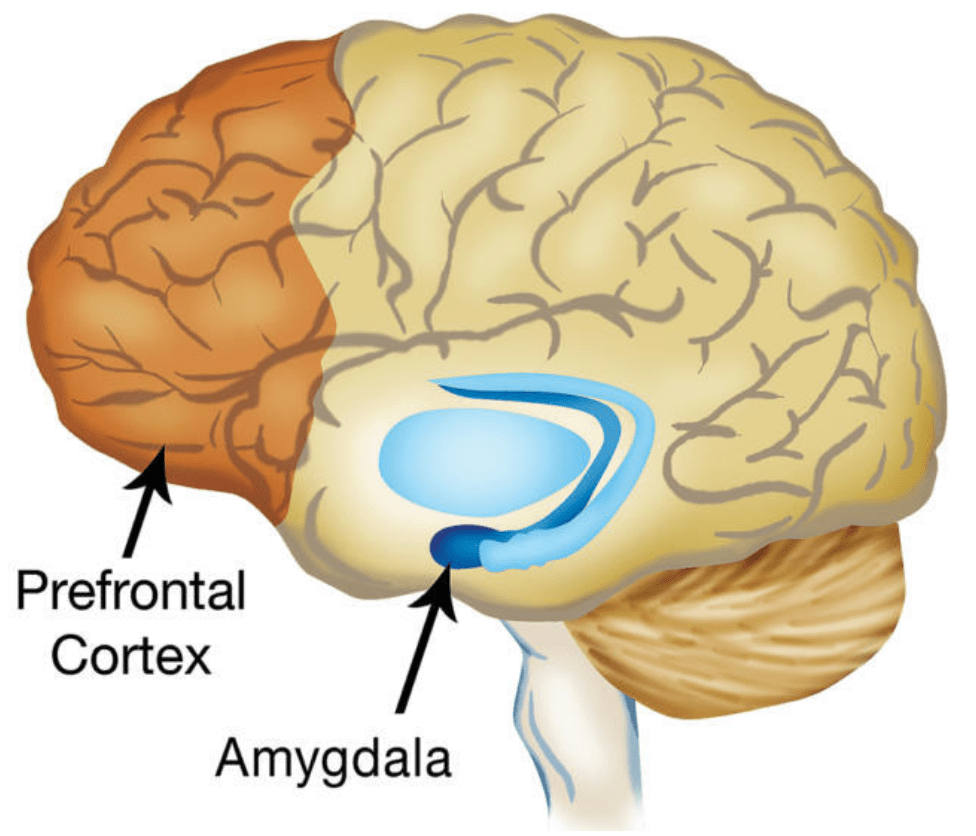
Next, there are two major players who kick off as soon as you are offended, denied, or simply wronged: the prefrontal cortex PFC (driver) and the amygdala (passenger). PFC is more reasonable, keeping emotions in check, while the amygdala is responsible for emotional reactions. And when you are angry, the amygdala takes control of the steering, not letting PFC find the reason for the loud response.
Result?
You STOP thinking and become prone to misinformation. Your posture shifts, bringing your head forward and elevation of one shoulder, specifically of dominant arm. Knees hyperextend, putting maximum tension on the ligaments. Such continuous changes persisting with anger make your heart weak!
Further, there exists a negative correlation between empathy and anger. And by definition, empathy means the ability to take on another’s perspective. Simply put, we feel sad whenever we see someone sad, involving mirroring of reaction. And we also get angry when that anger is directed toward us. So, the question arises: how is there a negative correlation?
Well, because anger is an emotional response to threat, frustration, or social provocation triggering a physiological response, while empathy is an emotional reaction to another individual’s emotional state.
Finally, how can we get the prefrontal cortex back in the driving seat?
With the help of ‘cognitive reappraisal,’ which is like putting on a pair of glasses that help you see things differently in a cooler way. Suppose while driving somebody hits from the back. Instead of saying all the women directed curse, you might think, “This is office hours, and there is too much rush. The person did not actually intend to hit.” And when you use cognitive reappraisal, your brain is doing a special kind of workout flexing the muscles of prefrontal cortex.
Practice taking deep breaths and feeling the air fill your belly. Repeat calming words like “peace” or “fuck it” as you breathe. Picture a serene scene or memory and feel tensions melt away. Lastly, have a glass of water.
References
1. https://www.ncbi.nlm.nih.gov/pmc/articles/PMC3260787/
2. https://www.ncbi.nlm.nih.gov/pmc/articles/PMC4692323/
3. https://www.apa.org/topics/anger/control
4. https://www.ncbi.nlm.nih.gov/pmc/articles/PMC4692323/
5. https://econtent.hogrefe.com/doi/abs/10.1027/1618-3169/a000489?journalCode=zea
6. https://www.ncbi.nlm.nih.gov/pmc/articles/PMC5832681/
7. https://journals.plos.org/plosone/article?id=10.1371/journal.pone.0255068
 grewal