
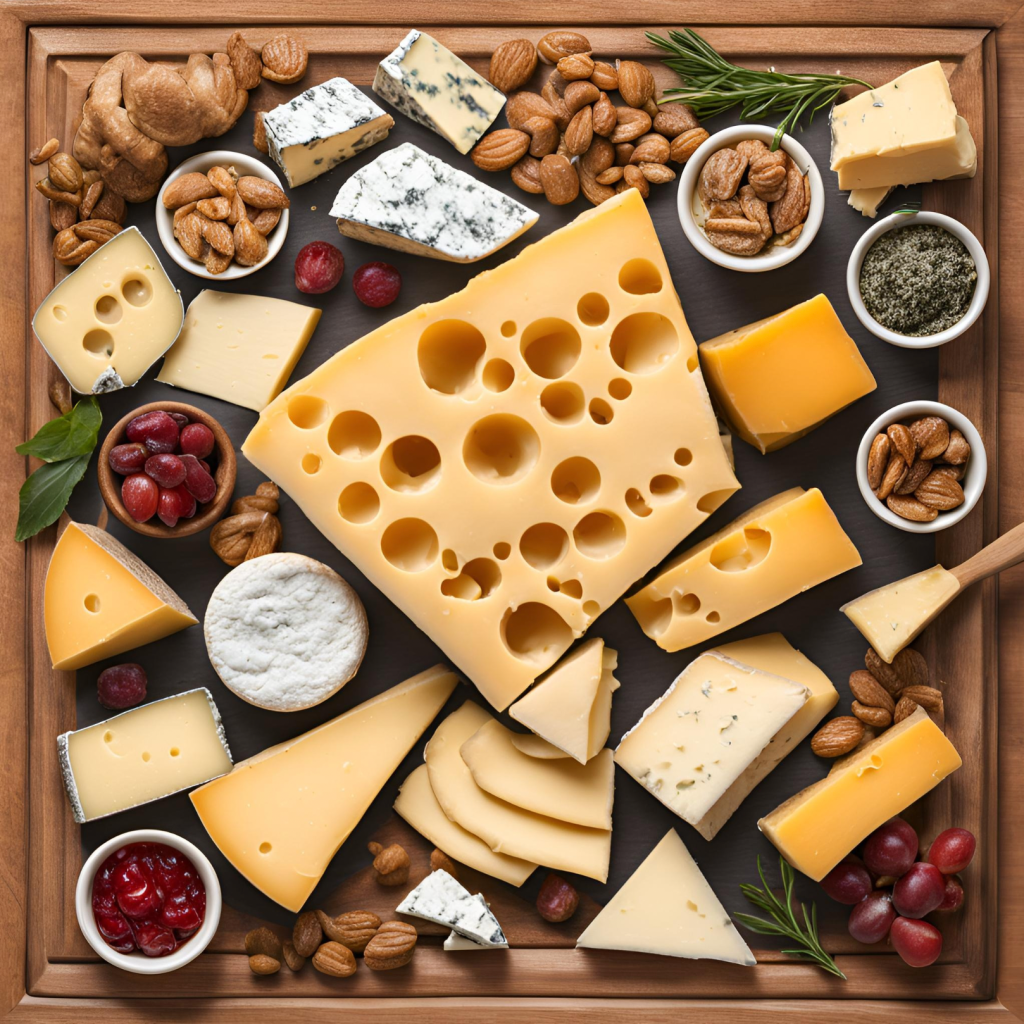
Day ZERO, you don’t feel good about your body and decide to do something about it. You go through the facade of influencers who tell you what you should eat and do. Some might delve into research articles; others would opt for a health counselor. Whatever it may be, most will emphasize on protein and understate fat. But know for sure they are inclined towards one school of thought.
We’ll take the example of cheese and slice it up!
But before that, what are fats(fatty acids)?
The cell membrane is like a security checkpoint at a concert, deciding who enters and leaves. Now, this membrane isn’t just a barrier, it surrounds the stage (nucleus) and other backstage areas (organelles), ensuring everything runs smoothly. Now, the fats in cell membrane act like security guards. And the physique of the security guard decides how stiff (saturated fats) or fluid (unsaturated fats) the membrane is. This flexibility becomes essential when the temperature changes outside (environmental stress), like in hot or cold weather.
So, to summarise, saturated fats are solid at room temperature and are primarily found in animal-based foods like meat, dairy, and tropical oils. In comparison, unsaturated fats are liquid at room temperature and are found in plant-based foods like nuts, seeds, avocados, and vegetable oils, which can be further divided into monounsaturated fats (e.g., olive oil, avocados, and polyunsaturated fats (e.g., fatty fish, walnuts).
No fat is wholly saturated or unsaturated. They’re classified based on the majority of constituents present.
Returning to our cheese example, it contains ~70% saturated fatty acids (myristic, palmitic, and stearic acid), ~28% monounsaturated oleic acid, and ~2% polyunsaturated fatty acid. It is a nutrient-dense food that provides a range of essential vitamins (A, B6, B12, D, and K) and minerals (calcium, iodine). A study published by the American Society for Nutrition found that cheese consumption is inversely related to cardiovascular disease, coronary heart disease, stroke, estrogen receptor-negative breast cancer, type 2 diabetes, and dementia. Further, moderate cheese consumption can be part of a healthy weight loss plan.
Now, some may argue that cheese is high in saturated fat and sodium, which can increase the risk of high blood pressure, cardiovascular disease, and type 2 diabetes, but that is the case of overconsumption.
So, what is the right amount?
WHO recommends limiting fat intake to less than 30% of total calorie intake and limiting saturated fat to less than 10% to maintain weight. To put it in numbers, approximately 2250 calories are required to do so, and one slice of Amul cheese contains 70 calories. Since cheese is not all saturated, three slices won’t put extra mass on your body, considering the fact that you have a decent step count and cheese is the only source of fat in your diet.
The benefits appear to outweigh the risks for most people. To conclude, the type of fat never matters. Just the amount does!
References
1. https://www.sciencedirect.com/science/article/pii/S2161831323013285?via%3Dihub
2. https://www.mdpi.com/2304-8158/10/11/2639
3. https://www.nature.com/articles/nbt1097-950
4. https://www.ncbi.nlm.nih.gov/pmc/articles/PMC6927928/
5. https://linkinghub.elsevier.com/retrieve/pii/S2161-8313(22)00523-3
 grewal